Search This Blog

Monday, March 3, 2025

Tuesday, February 18 Tortuguero

 Tuesday, Feb 18

Bags out at 6AM this morning and we leave at 6:30 for a longish day of travel to Tortuguero, on the Atlantic (Caribbean) Coast. Only accessible by boat, we'll drive part way and then get a boat.

It is clear and sunny as it takes about 30 minutes to leave the congestion and mix of businesses and homes of San Jose.  On the outskirts of town there are some lovely homes and lush vegetation.  As elevation rises we drive through some low clouds and note huge giant ferns at the roadside.  18-wheeler truck traffic is heavy and we pass one accident where the truck dangles over the median guardrail.


We stop for breakfast at a place that has beautiful grounds. I don't remember the breakfast, really, but enjoyed seeing a sloth, boa constrictor on a branch, some lizards and frogs.  Lots of beautiful flowers, too, and a clear running stream.


Yes, that's a (wet) sloth. Really.


And that is a boa constrictor - part of one anyway!


As we continue, Andrey tells us about 2 and 3 fingered species of sloths  in Costa Rica.  They eat mostly leaves, though the 2 fingered ones will also eat other things. They digest via a fermentation process, so that is why they spend so much time at rest.  Someone later tells us that some of the leaves they eat act a bit like a sedative, so that is why their metabolism is so slow!

There are 130 different snake species in Costa Rica, 30 venomous with the boa constrictor the largest snake.  The poisonous frogs don't produce their own poison but accumulate it from ants and other insects that they eat.

Occasional cattle and other small farms as we continue on route 32.  Andrey says Brahma and Costa Rican Angus are the major breeds of cattle.  Many of the homes, regardless of size or quality,  sport satellite dishes. 

The road narrows and we leave the "highway" behind.   We soon spot occasional  Chiquita and Dole signs as Andrey says there are many banana and pineapple plantations in this area.  He has a love/hate relationship with them, he says, as they provide economic boom and employment on one hand, but also deforestation and loss of habitat on the other.  

 Lots of bananas and the bunches are covered with blue (plastic?) bags to keep the birds from eating them. We see a long zip-line kind of area where they are transporting the picked banana bunches to trucks.

Interesting that fields here are separated by "living fences".  Sometimes there are thick hedges, but most often there are poles cut from trees which sprout and become trees or bushes themselves.

We arrive at the boat dock around 10:15 - a very busy place where someone is making some $$ charging $1 to use the toilets and get a few sheets of tp.  The boat ride is about an hour long, during which time we see a crocodile and various birds, mostly  herons and egrets.   Andrey is an avid birder and provides lots of bird information.


We arrive at our lodge which is quite nice, have lunch and get settled.


Then it is off to the other side of the canal to the Sea Turtle Conservancy.  This is our boat driver for the duration - Jose.


The turtles lay hundreds of eggs, but only 2 out of 100 will survive to adulthood, many of which are eaten before they even make it to the water.

 The green turtles arrive July-October to lay eggs in the warm sands here.  So no activity this time of year. Turtles spend only 1% of their lives on land and can live to be 100.   Since 1959, the Conservancy has worked  to protect the eggs and educate locals and visitors as to conservancy.      

Greg spots these leaf-cutter ants on a nearby path.  We'll learn much more about them later


From here we head to a presentation about coconuts by Cyold, a very lively and entertaining man who is part of the Caribbean Tico community that lives in this part of the country.  Jamaicans, West Indians and others were brought here to help in building a railroad (mostly to ship coffee), and many stayed.

Because coconuts float and easily sprout, they are found throughout the Caribbean.  Cyold  educates us as to the many uses and benefits of coconut while making a delicious candy using coconut, ginger and cane sugar.  Served on almond leaves, it is delicious!


 He also gives us some coconut oil to massage into our skin and tells those who are balding that coconut oil can work wonders for hair growth.  We leave the cooking area and go nearer the shore where he shows how to cut the coconuts and talks more about coconut water, milk, oil, etc.

Greg later spots this man picking coconuts.


While he is talking, a few of us notice this huge green iguana which is slowly making its way out of the trees and down to the water for a drink.   It is almost 5' long nose to tip of the tail!


After the presentation we walk into the town of Tortuguero which is filled with tourists.  We walk to get a nice view of the beach  and get a quick photo of Debi and Rick.  


This mural was pretty and we did see some kids playing with a soccer ball.  Yes, they do call it soccer here - not the British football.
 
Back in town,  I ask these pleasant policemen if I may take their picture. Good looking crew!

 We haven't seen many police, only in the busy area of San Jose and here,  and a few police cars.  Women have been part of the picture in all cases.

Back to the lodge for another buffet dinner.  The food has been plentiful and we are learning to be more selective and not try everything!  Mainly fruits, vegetables, the ever-present beans and rice, usually a soup (pumpkin seems popular).  Chicken, fish, sometimes beef and pork. Breads seem rather tasteless to me.  Desserts are often rice pudding or flan.

 Showers feel good and a good night's rest!


Saturday, March 1, 2025

Monday, February 17, 2025 San Jose

 Monday, February 17

7:00 breakfast this morning and an 8:00 lecture here at the hotel on Biodiversity in Costa Rica.

The speaker, Sylvia Valerio was excellent.  Though Costa Rica is small (about the size of West Virginia), it contains 6% of the earth's diversity including 12,000 species of butterflies and moths, 1400 species of orchids and 932 species of birds.


Costa Rica is midway between the North and South Poles, near the equator, which means it has species that migrated from both North and South America.  Near constant temperature year round and 12 hours of daylight every day leads to more action, faster growing and faster evolution.  Since the 1960's Costa Rica has redirected efforts to focus on education about and protection of its valuable resources.


Next, we meet for a short bus ride downtown to the Gold Museum which is built as an inverted pyramid under the Plaza of Culture.  We pass the National Theater, built by coffee barons in the late 1890's.


Plaza of Culture

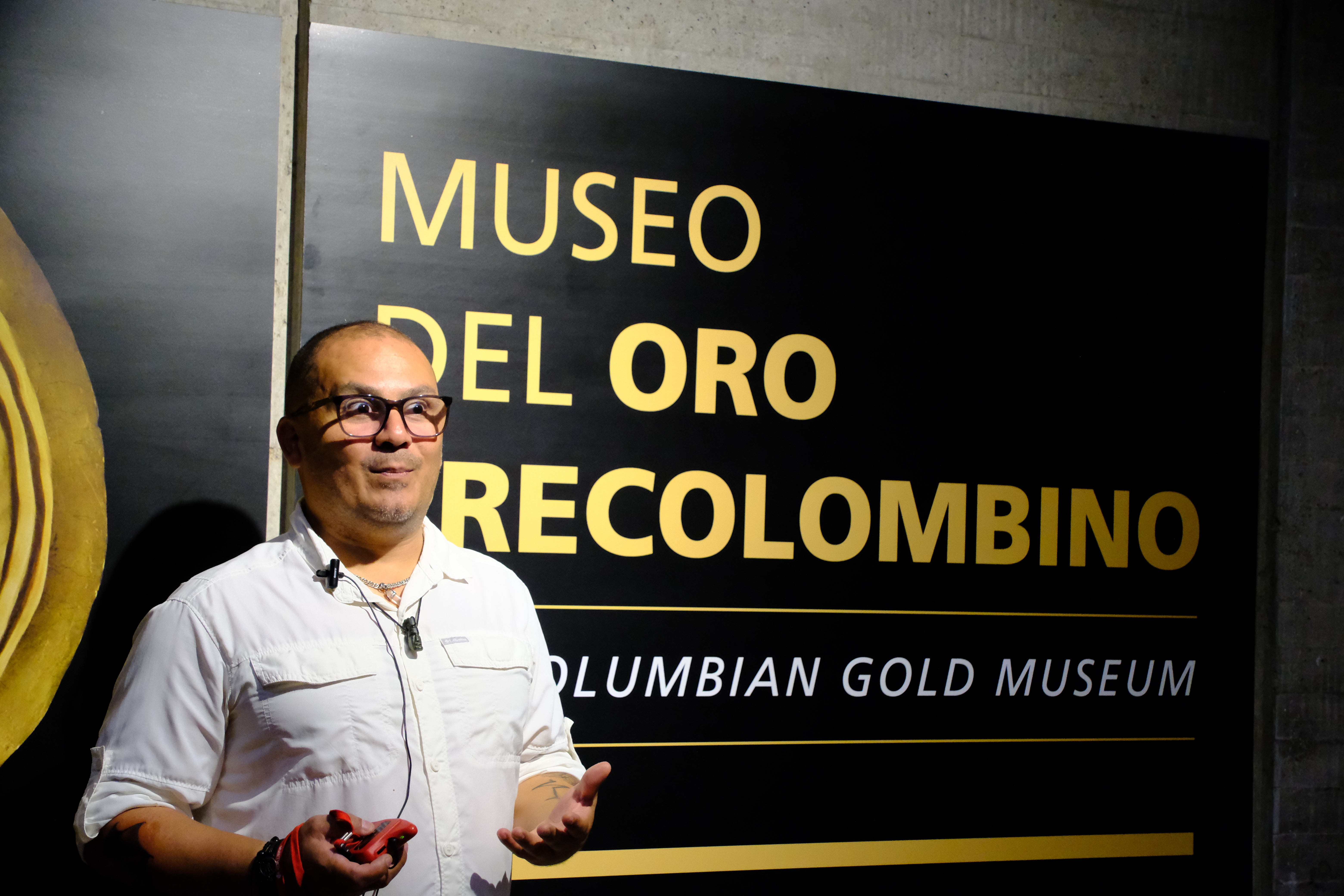
  Our guide there is Martin, a very enthusiastic and entertaining man. 

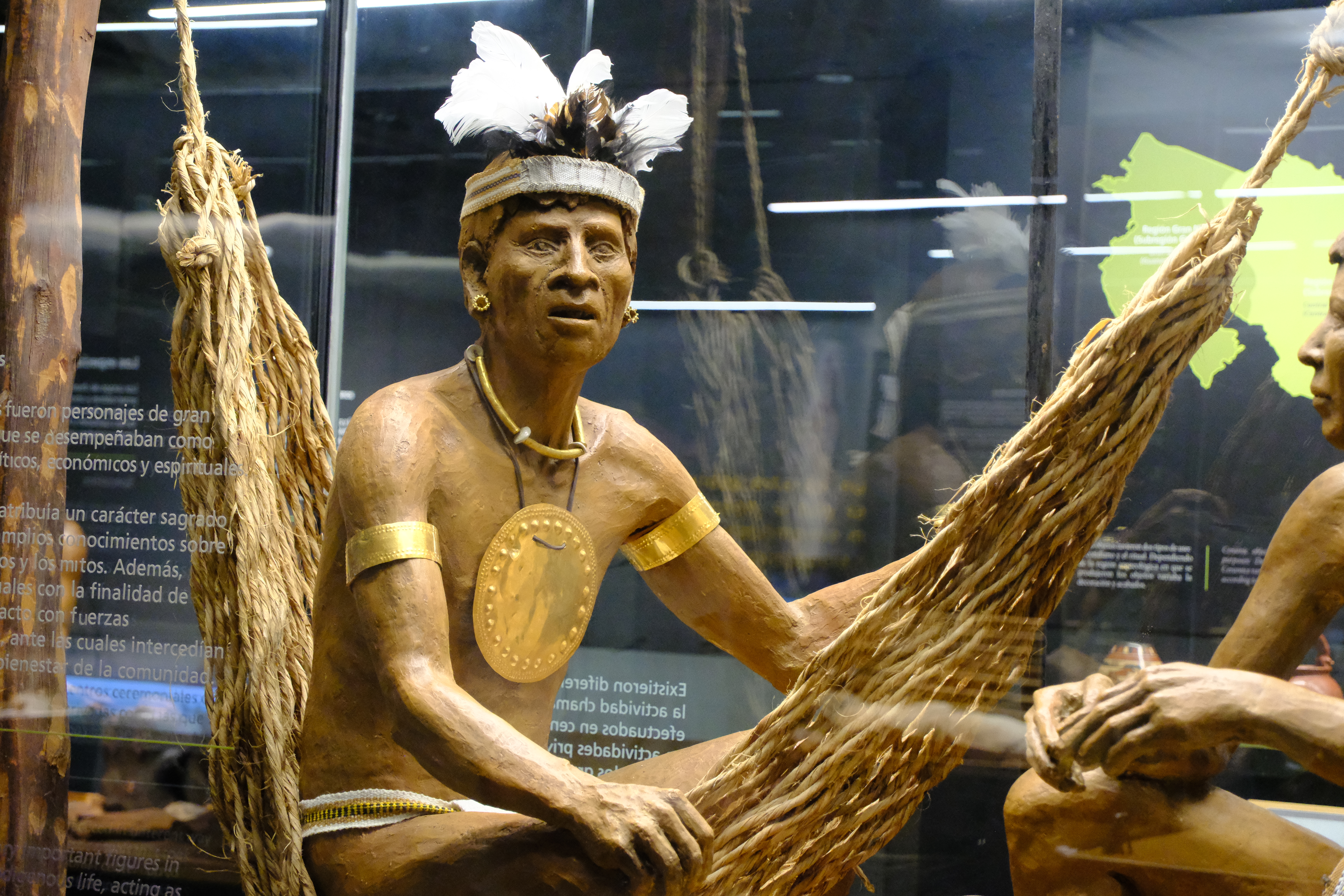
 He begins by discussing how Costa Rica was formed by volcanic action which resulted in connecting North and South America.  The oldest evidence of human occupation here goes back to 10,000 to 19,000 BC.  There are still eight different groups of indigenous people in small pockets of the country, but they are less than 3% of the current total population.  The pre-columbian gold dates from 300BC to 1550 AD.  Many beautiful ceremonial and decorative pieces!


Six of the 8 indigenous groups are matriarchal.  Martin says that Costa Rica's view of races is "If you close your eyes -  everyone looks the same".  


From the museum we drive through town to a Britt Coffee Tour.   There is a variety of housing along the route, many with metal roofs.  The tallest, most modern buildings seem to be banks.  Seems like all brands of auto dealers are represented, and traffic is heavy in town, with motorbikes moving between cars regularly.


Our guide at Britt Coffee is Tina, who says "If you don't drink coffee, we forgive you."  Costa Rica has perfect weather for growing coffee, which it has been doing since 1750.  Coffee seeds take 2 months to germinate, then are put in individual pots for a year before being planted.  Then it takes 2 years for them to  produce.  They would turn into trees, but are kept trimmed to about 5 feet ("We are short people," says Tina).

This is one of the decorative carts that were used to transport coffee.


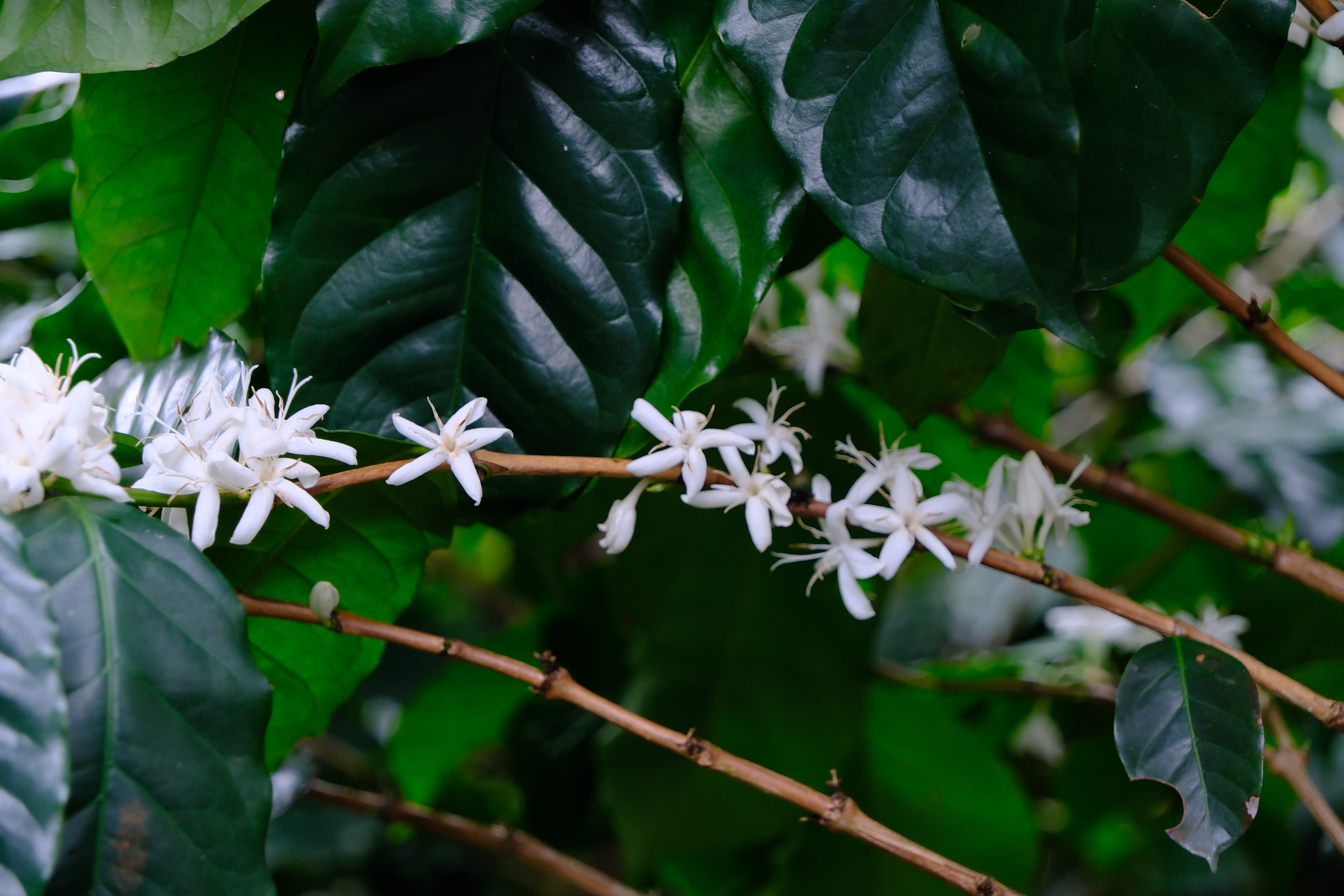
We see one plant with flowers, which Tina says, is another sign of climate change - they should not be blooming this time of year. When beans are red, they are hand-picked.  Pickers, many of whom are migrants from Panama or Nicaragua, are payed by the pound.  An experienced picker can make about $60/day.   (Tom is outfitted for the task. ) 

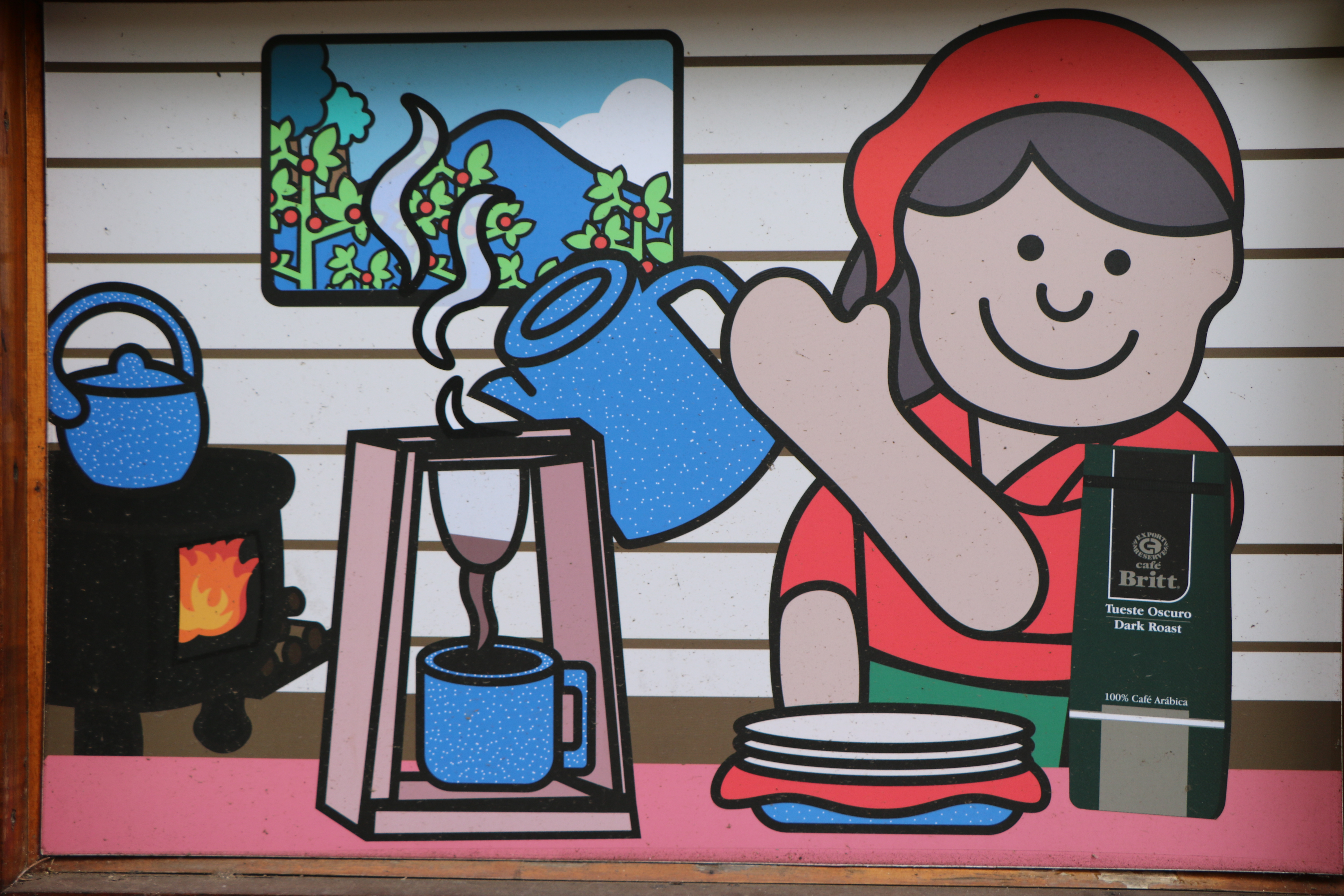
 It takes about 45 beans for 1 cup of coffee.  Then it is immediately processed - milled, dried and roasted.  Costa Rica produces only 1% of the global production, but, she says, the BEST Arabic coffee.  There are several stations where we can try different roasts and those who are coffee afficionados appreciate it.  (Me, I have never learned to appreciate it.)  She also shows us several different ways of brewing coffee.


On the return drive, Andrey covers a wide range of topics about Costa Rica.  Some highlights:  Eco-tourism is the #1 revenue industry in Costa Rica.  The pandemic had a significant impact, but it is recovering nicely. They have quite a few immigrants from Nicaragua and Venezuela, but not many Costa Ricans emmigrate, as free healthcare and free education and a fairly steady economy keep people here.  Sales tax is 13% and Income Tax is 8%.  There are Police, but no army since 1948.  Citizens can retire with a pension and you must live here 7 years to become a citizen.   Protected lands plus private reserves total 40-45% of all land.

 Tonight is dinner on your own, but those who wish can go on the bus to a barrio with many restaurants.  We do this and end up enjoying some unique burgers and the biggest onion rings we've ever seen! We eat with Rick and Debi.