Search This Blog

Thursday, September 5, 2024

Wed., August 14 Medicine Bow, the Virginian, Casper

 Wednesday, August 14

Beautiful sunrise and the aspen seem to glow.

  And shortly thereafter, yesterday's deer is back.


We get a "Check Tire Pressure" message.  It looks a little low but we decide we can make it to Casper and there is a Discount Tire there (which is where we purchase our tires).

We decide to drive early this morning and stop to make breakfast somewhere along the way.  So we continue across the Sierra Madre Range and cross the Continental Divide trail.


Out of the mountains, we find more open range and ranch land.   Seems that everyone is making hay, and stacking it.


Definitely where the deer and the antelope play!

We turn north to Saratoga, where we gas up and visit the Saratoga National Fish Hatchery. 


 Constructed in 1915, this hatchery currently produces between 5 and 7.5 million lake trout eggs and 3 million brown trout eggs.  We wander about the various ponds.

This man throwing food granules is the only person we see and he isn't interested in talking.  

It takes a year and a half for these small fry to reach 8 inches.  They had some large fish too.

The signage says they also breed endangered Wyoming Toads here, having released over 81K since 1999, but we didn't see any sign of them.

We walk to the nearby Silver Sage Ranch Wetlands along the river.  Ducks and a few other birds, plus some pronghorns in the distance.

 We pause in the parking area - we're the only ones here - to make blueberry pancakes and oranges for a tasty breakfast.

Next stop is the small town of Medicine Bow and the Medicine Bow Museum which is in an old railroad depot along route 80.


 We talk with the curator there for a bit.  He is an ex-marine but now looks more like a backcountry cowboy. He asks where we are from and talks about transporting torpedos from the west coast to Texas when he was in the service - the only time he's been to Texas.

A little bit of everything, including another sheep wagon, rocks, Indian artifacts, dinosaur discoveries, telegraph and railroad materials.  Outside is the log cabin where Owen Wister, the author of The Virginian,  lived.  Remember that TV show starring James Drury?


Route 80, the  Lincoln Highway,  earlier served as a route for the Pony Express riders and there is an old station nearby.


 Across the street is the 100 year old Virginian Hotel.  Beth pops in to see the interior where a couple of folks are having lunch. Old tin ceilings, fancy stairway and the obligatory mounted animal heads decor.


Many of the long straight stretches of highway have snow fences along them.  It is always windy here and the fences help keep the drifts off the highways.  A few places we have seen "living snow fences" where they have strategically planted tall bushes, but I assume they are difficult to keep alive due to the aridity. 


 We have also begun to see more wind turbines. Tim says Wyoming has many resources, including coal and natural gas, and wind technology is beginning to take off, though some oppose it.

From here, we went on to Casper which is one of Wyoming's larger cities at 60,000.  First stop is Discount Tire,  to get our "low tire"  checked.  They discover a nail as the culprit - ouch!  Fortunately Greg had gotten warranties on the new tires, so they had no problem just replacing it - yeah! Quick and easy! 

Next stop was a camera shop for a new battery charger.  The two men there were very helpful   They said their shop was one of 2 camera shops in Wyoming, with the other being in Jackson Hole!  We purchased a kind of funky universal battery charger, but it works.  They suggested we check out Fremont Canyon in Alcova for photos.

The National Historic Trails Interpretive Center, a nice, relatively new center just north of town was our next stop.  (Recommended by Tim.)  It deals mainly with the trails of the largest unforced migration in the world as 400,000 people made their way west across the US. (It is between a US Forest Service building and one for Bureau of Land Management, both of which we visited briefly.)


The center focuses on the trails first used by Native Americans, then hunters and trappers, then the thousands who traveled by wagon train.  In 1843 the trickle of immigrants started and over the next years those trails became crowded highways!  The California, Oregon, and Mormon trails all came through Wyoming and then went their separate ways.   

The nearby North Platte River was a great landmark, as was Independence Rock a bit further west. The river doesn't look too daunting today, but damns and reservoirs have tamed it considerably.  We watch a film and check out the displays which show the hardships of wagon train travel.  Most of those 400,000 people walked a large part of the way.  Gathering food, keeping supplies from spoilage, illnesses, weather, hostile natives and more created incredible daily challenges.

 Displays about the Pony Express, too, and then the railroads which turned a 6 month journey into a week long ride.

We decided to stay in Casper for the night.  The first Walmart we tried was pretty noisy and crowded, so we moved on to one on the outskirts, off 220, that was much quieter.   Dinner was chicken and potato salad from their deli. Played a little cribbage tonight.


Tuesday, September 3, 2024

Tuesday, August 13 Encampment, Battle Mountain, Savery


 Tuesday, August 13

Nice breakfast with Tim and Buca.  Tim creates a tasty smoothy and offers a rhubarb coffee cake too.  Yum!

He is off to work and we are off to the Encampment area.  Taking a different route this morning which goes through prairie, ranch land and then into wooded areas  - Rte 230, which dips into Colorado for a second.  

Through Riverside in a blink and into Encampment (2 blinks).  Tim shared that there are many small towns in Wyoming, some (like these two) almost on top of each other.  He says it is because there was a law passed in the 1800's that limited the number of bars in any one town - so they built more towns!

This dear was just standing in someone's yard as we came into town.


We head for the Grand Encampment Museum which both Tim and Tom & Sue recommended.  Quite a museum for such a tiny town!

Encampment was a meeting place for early fur trappers, traders and Native Americans and then, between 1903 and 1908,  became a boomtown for copper mining. A steam-powered aerial tramway carried copper ore over the Continental Divide to a smelter here.

There are 18 historic buildings here, including part of the tramway, timber, mining, railroad and agricultural history.  Most were moved here from nearby locations. An old train, a one room schoolhouse, a stagecoach building, dry goods store and various homes filled with furniture and hundreds of daily living items.  Lots of stories.


This room had one of the first fold out sofas and also was featured in a Sports Illustrated swimsuit edition.

This was a tie hack cabin.  Tie hacks were lumbermen who cut wood to make railroad ties when the railroad was appearing everywhere.
This was a stage coach station.


The main building had photos and other paraphernalia, including this
 "murphy bathtub" (our name for it)  which looks like a wardrobe when closed and a nice size bathtub when opened! 


Another highlight was a two story outhouse, which was built because of high snowdrifts.  The downstairs holes were closed and bypassed and the upstairs ones used when the snow got very deep!  Bet we will never see another one of these!

A young man, maybe mid-teens,  was learning to give the tour, but has a ways to go.... so we stuck with him for only a few buildings. 

From Encampment we headed west over Battle Mountain which is part of the Sierra Madre Mountain Range.  Some pretty steep grades as we pass over the Continental Divide. 

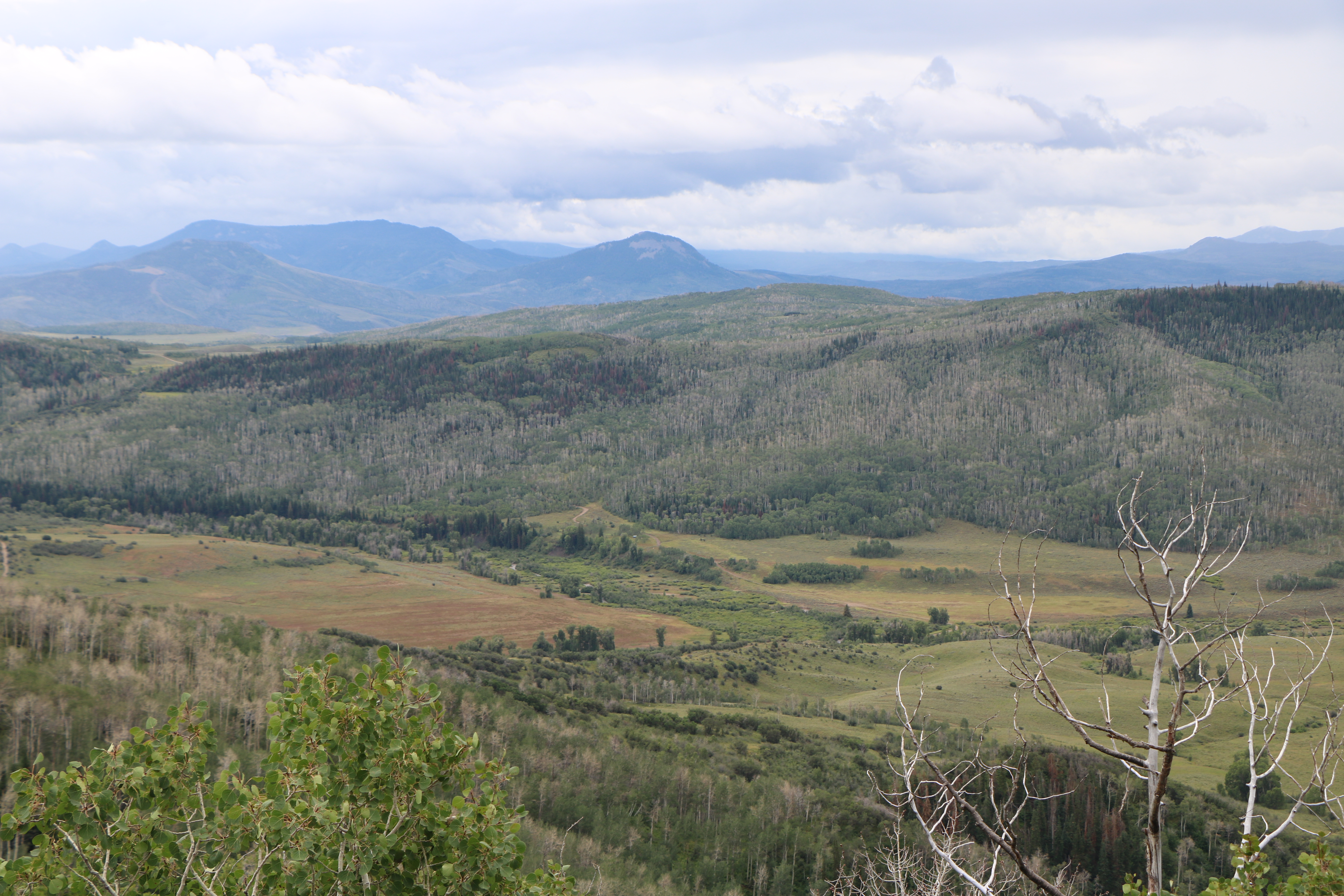
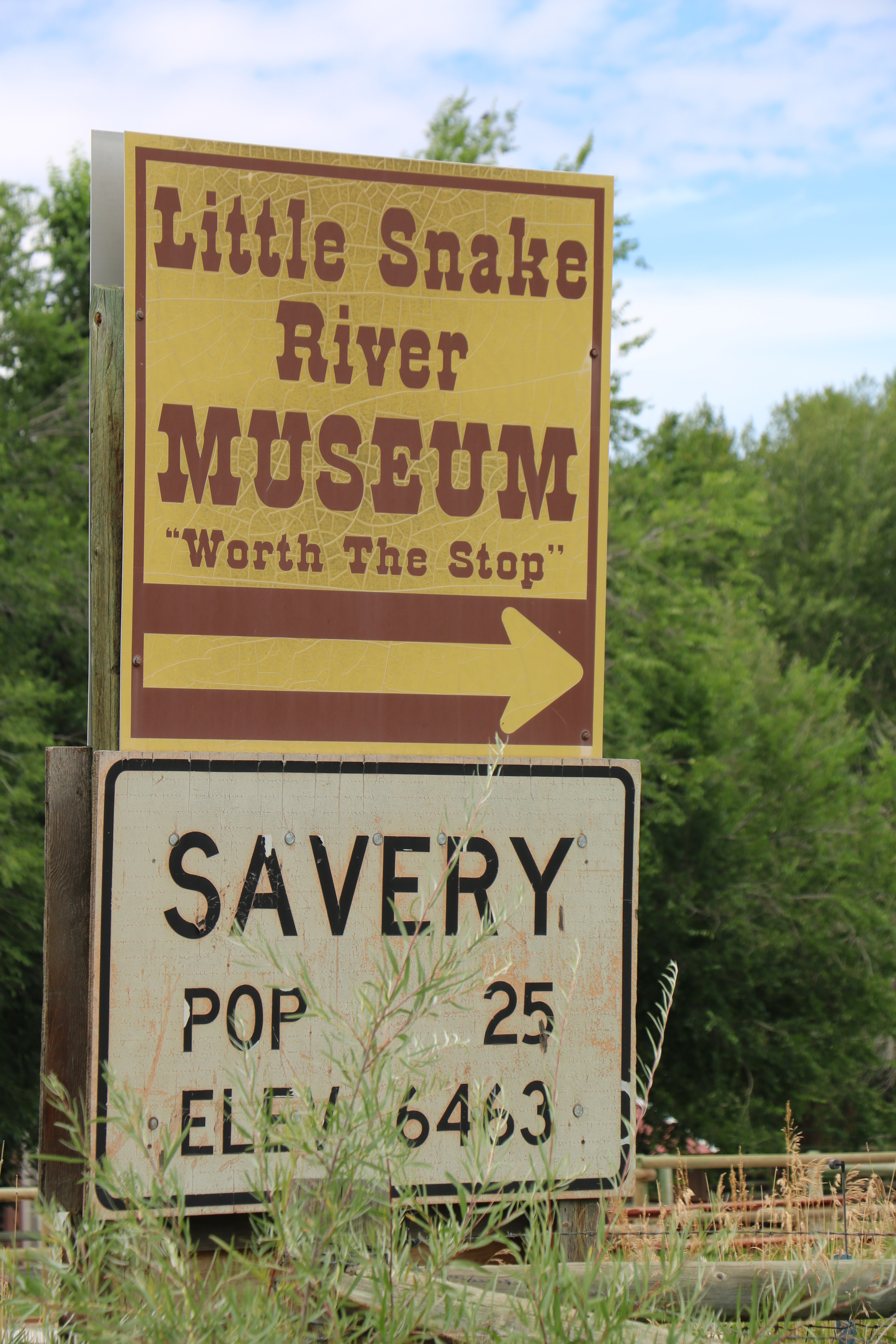
We passed several National Forest Campgrounds which we'll consider for tonight.  A few stops for photos and then we wound down to the town of Savery  (Population 25!) where we'll visit the Little Snake River Museum.

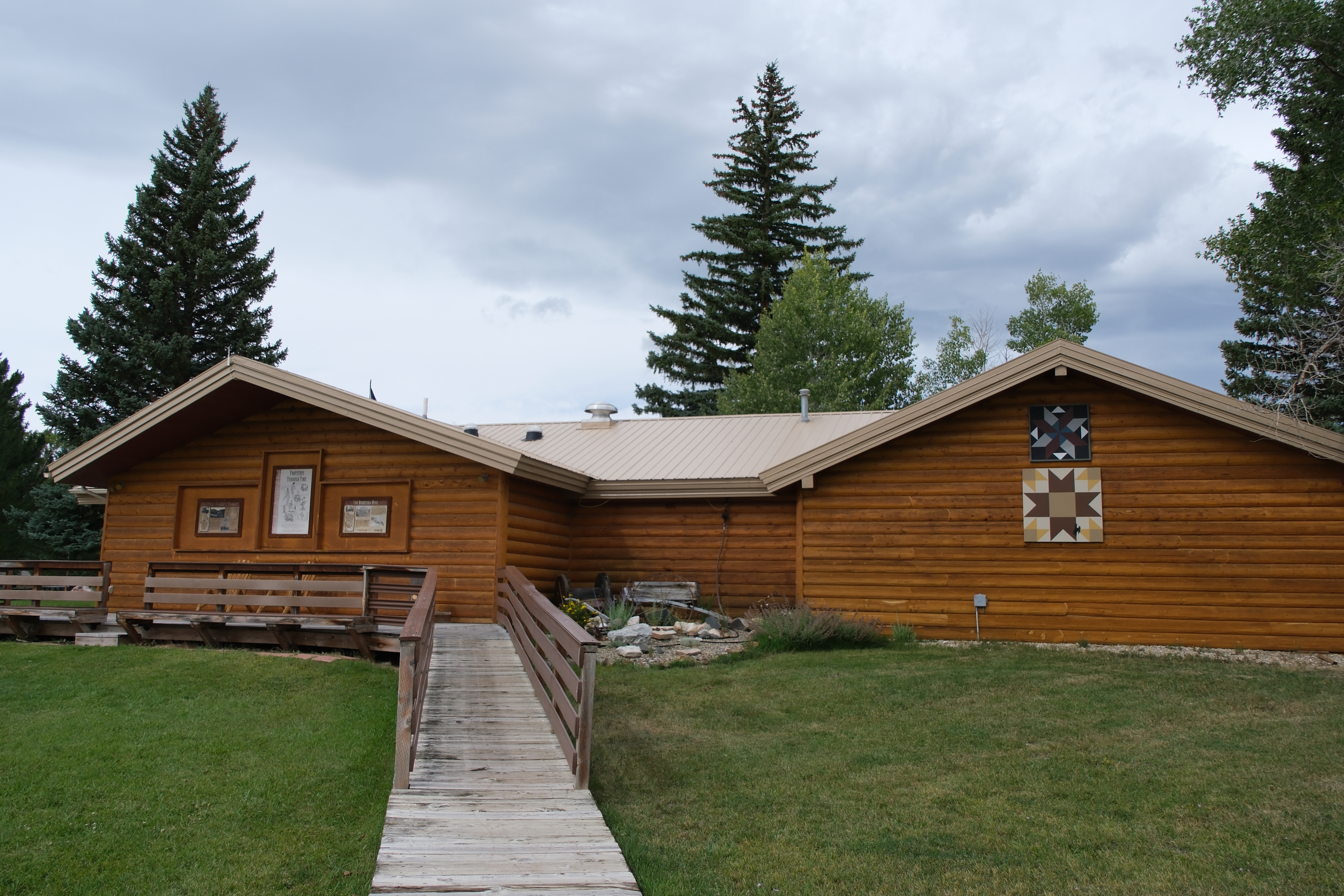
The Little Snake River Valley has been home to native people, explorers, trappers, settlers, miners, homesteaders, stockmen and outlaws and this museum tells the story of many of them.

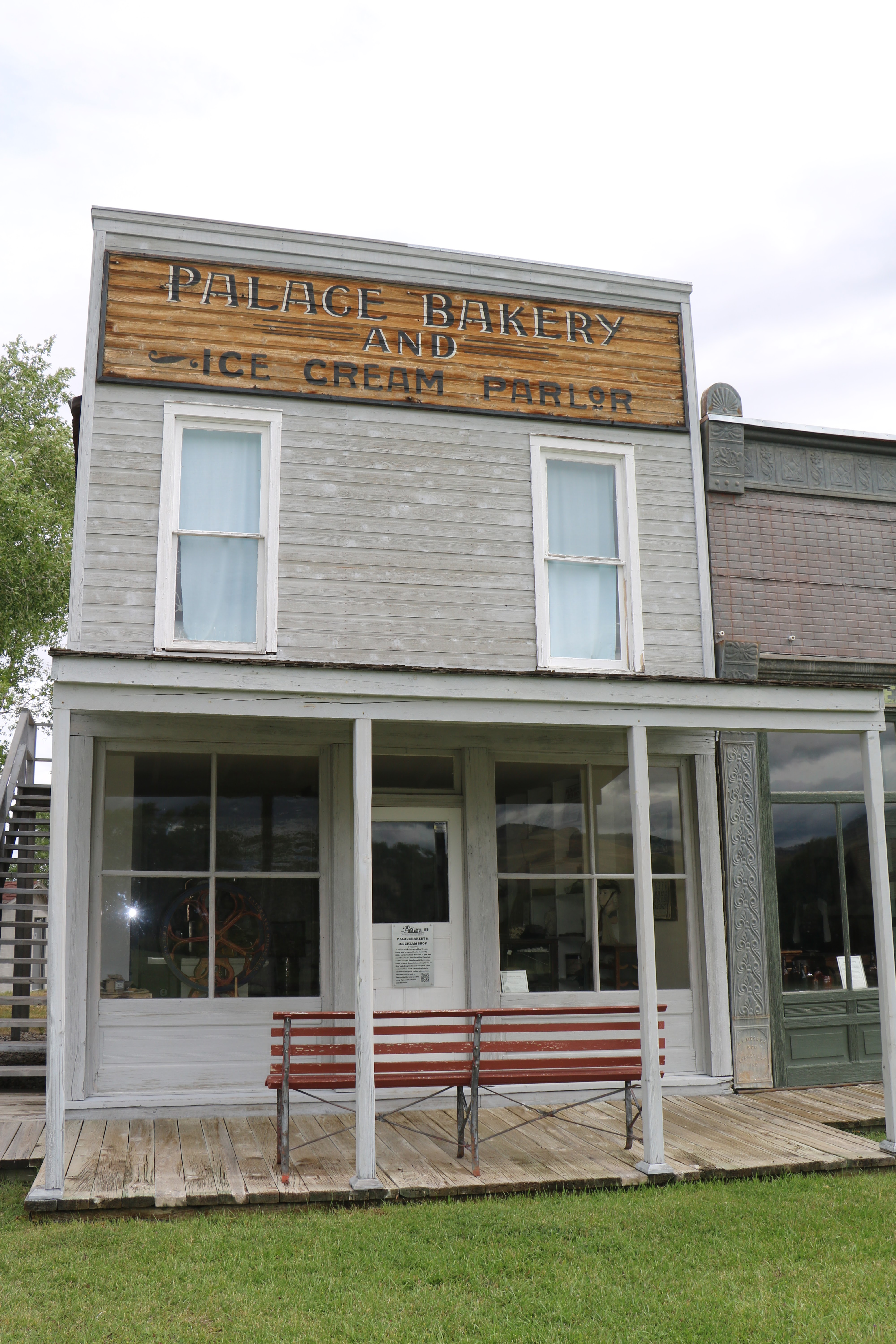
Note that the Johnson Barber Shop also offered a "complete and understanding mortuary service". The Harris Mercantile carried a little of everything; farm equipment, clothing, fabric, shoes and food.  It was also a place to share news and socialize.

Everything here is from local donations.  Again, there are multiple homes, farming equipment, wagons, a garden, saddlery, blacksmith shop and more.  Self-guided.  


Pretty hollyhocks.

Then..
And Now.


This is a sheep wagon....we have seen a few of these in museums and saw one being used in northern Colorado a few years ago. Sheep ranching was once very popular in this area and in northern Colorado. 

Rules for teachers included that women teachers that married were dismissed. Smoking, drinking alcohol, getting shaved in a barber shop or playing pool were reasons for dismissal.  After five years a teacher received an increase of twenty-fine cents per week. 

Rules for students  (1860) included sitting up straight at all times no squirming, fidgeting or whining. Do not speak unless spoken to.  Fighting, lying or cheating meant expulsion. There is a daily inspection of neck, ears and fingernails prior to class to ensure cleanliness of person. Young ladies must never show a bare ankle and boys and girls clothing should cover arms and legs completely.  There was a note, too, that nothing should be dipped into ink wells except pens.

The main building has quite a lot of clothing.

 We chat with the woman in the gift shop and ask about a gravel road we were considering for boondocking....probably doable, but we decide to stick to the paved roads for now and go back up the mountain to Lost Creek Campground.  The temperature difference in the mountains draws us back there for a cool night's sleep.

Lost Creek is a small campground but other than the camp host there is only one occupied site.  We pick site #7 which is a mix of sun and shade and Greg looks around for firewood.  He points out some chicken-sized birds nearby and I go to take a few pics.  There are 5 or so, I think an adult and some larger young ones.  They don't fly away, just move through the underbrush.


 We see two smallish snakes nearby too - both curled up in sunny spots.  

 I walk down to ask the camp host if he/she knows what kind of birds and snakes they are and Cheryl answers my knock.  Her husband Ken is out on a hike.  She says they don't see many snakes and doesn't know what kind they are, just that they aren't poisonous. The birds are blue grouse which are plentiful in the area.  There are two racks of firewood by their site and she says to help ourselves.  The forest service cut several trees this Spring and her husband has split the wood.

Back at the campsite, Greg gets the fire going and Ken and a friend come back from a hike. The host is from Tennessee and his buddy from Indiana.  They stop and chat.  Both are motorcyclists and engaging story tellers as they talk about various trips and we share travel stories. 

 After they leave, we are visited by this friendly doe grazing on grass and bushes.  At first we are excited and take pictures, but she must have been fed by other campers because she has no fear and Greg has to wave a stick at her to get her keep her distance.  She has two fawns with her, but the fawns come and go. They all finally disappear as we get ready for dinner.  

t!


We enjoy the fire and relax under a bright 3/4 moon.    No signal here, but we can type emails or texts and they will go out next time we get signal.

  We may need the extra blanket tonight.